
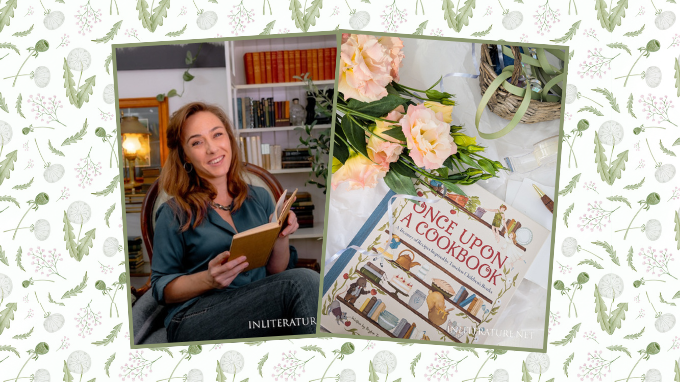
Behind the Covers: Once Upon a Cookbook
A Delicious Chat with Bryt Taylor
Disclosure: This post may contain affiliate links, as I am an Amazon Associate, this means that I will make a small commission if you decide to make a purchase through my links, at no cost to you.
Don’t I have a treat for you today! Pun very much intended! I would love to introduce you to a brand new LITERARY COOKBOOK! No more looking high and low for ideas for our bookish Tea Times, Bryton Taylor has just provided the ultimate guide: Once Upon a Time Cookbook: A Treasury of Recipes Inspired by Timeless Children’s Books, illustrated by the very talented Emma Adams. When I first opened this book it was like opening a dream come true, so many delightful books, so many delicious recipes and dreamy illustrations! I think it’s almost perfect in every way. So grab a cup of tea (or coffee if you must, but tea would be better) and join me to chat with Bryt about her new book.
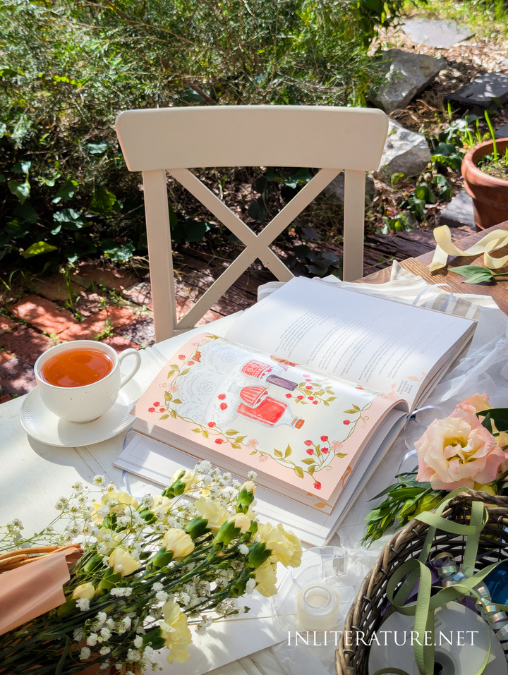
Hello Bryt! Could you please introduce yourself and your brand new cookbook?
Sure! Like many here, I’m a reader. I love books and losing myself in the worlds they create. For over 15 years, my way of going deeper into those worlds has been to recreate the food found within them, the little moments around the table that make a story feel real. Along the way, I found myself diving deep into food history, old cookbooks, and archives, trying to get as close as possible to what those characters would have eaten in those times and places.
Once Upon a Cookbook is my third cookbook, and it feels like the most natural one I’ve written, because it draws on everything I’ve been quietly exploring for all of these years. It’s a treasury of recipes inspired by the golden age of children’s literature: from the iconic riverside picnic with Ratty and Mole in The Wind in the Willows, to afternoon tea in The Secret Garden, to Marilla’s Raspberry Cordial from Anne of Green Gables. Some recipes are recreated as faithfully as possible to what characters would have eaten. Others are inspired interpretations, a way of experiencing a world that exists only in the imagination. Basically, it’s a cookbook for anyone who has ever read a story and wanted to step inside it.
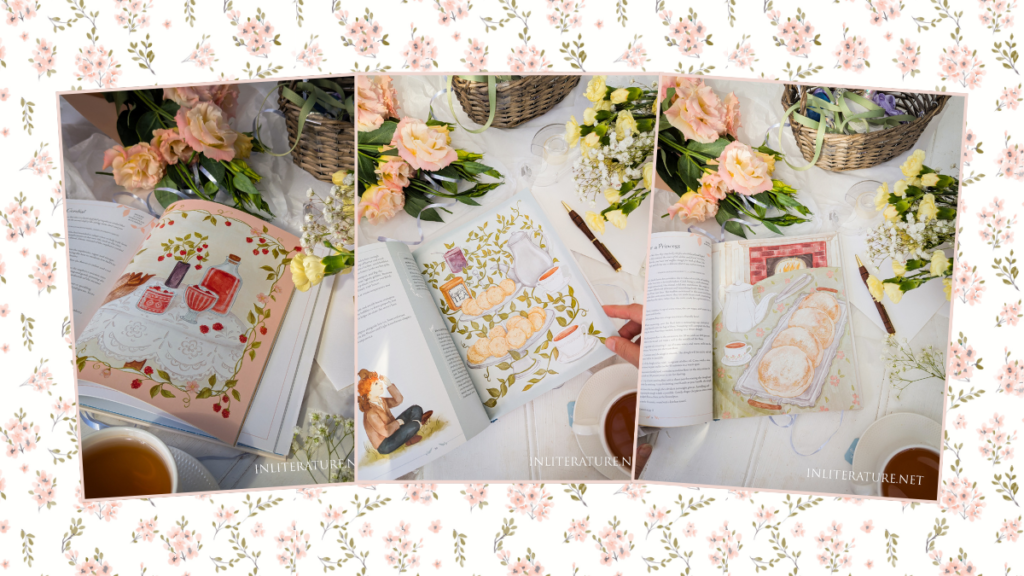
I fell in love with your cookbook at first glance! It has all the elements that I love most: great literature, great food and stunning illustrations. And tea! Could you share with us what inspired you to write this cookbook?
I was fortunate that Insight Editions reached out to me after discovering my work online, but the book came together quite naturally because in so many ways I’d been writing it for years without realising. My blog, InLiterature.net, has always been a place where I recreated recipes inspired by novels and children’s books. The way certain meals are described in stories, where you can almost taste them as you read, that’s always piqued my curiosity.
There are so many approaches to this space, but along the way I got curious about what those characters were actually eating. And so began the rabbit holes! I explored and recreated those recipes as faithfully as I could since it’s a way of bringing something tangible from those worlds into our own.
And there’s something particular about a cookbook as a format that a blog can never quite create. It’s something you hold in your hands, pour over when you’re having a cup of tea, and can return to again. And being able to give a cookbook to someone you love is really quite beautiful. For me, it’s a way of saying: I want you to have this experience too.
What first sparked your love of connecting stories with food? Was there a particular book or memory from childhood that shaped Once Upon a Cookbook?
When I read your question, my mind went straight back to one of my favourite childhood series, The Boxcar Children. It follows four orphaned siblings who run away rather than go and live with their grandfather, who they believe might be cruel and unkind (he turns out, of course, to be nothing of the sort). They find an abandoned boxcar in the woods and make it their home.
When I thought about it, the food wasn’t something I particularly noticed as a kid. It was just part of the world. Blueberries they forage themselves, brown bread, cheese, milk, a little outdoor kitchen of their own. But that’s exactly the point. The food was so woven into the story that it made the whole adventure feel real, real enough that I genuinely wanted to forage blueberries myself and build a home in a boxcar. The food was just part of the adventure.
The moment of actually connecting stories and food and sharing that curiosity came about around 2010. Growing up, we always loved to theme our holidays, and for one we decided to do an Alice in Wonderland Mad Tea Party. I made the decorations and baked the unbirthday cake. I will note that the cake was a complete flop, it was literally sliding off the plate! But I posted about it on my blog, where at that point I’d been sharing just a mix of creative projects and various things I was dabbling in. And something happened when I published that post. It resonated. People responded more than anything else I’d shared, and I realised I wasn’t alone in wanting to bring literary worlds to life. As much as I love to decorate, it became clear that food was a really powerful way of making these worlds feel real. I made the unbirthday cake again, this time much more successfully, and from that point on, food in literature became my focus.
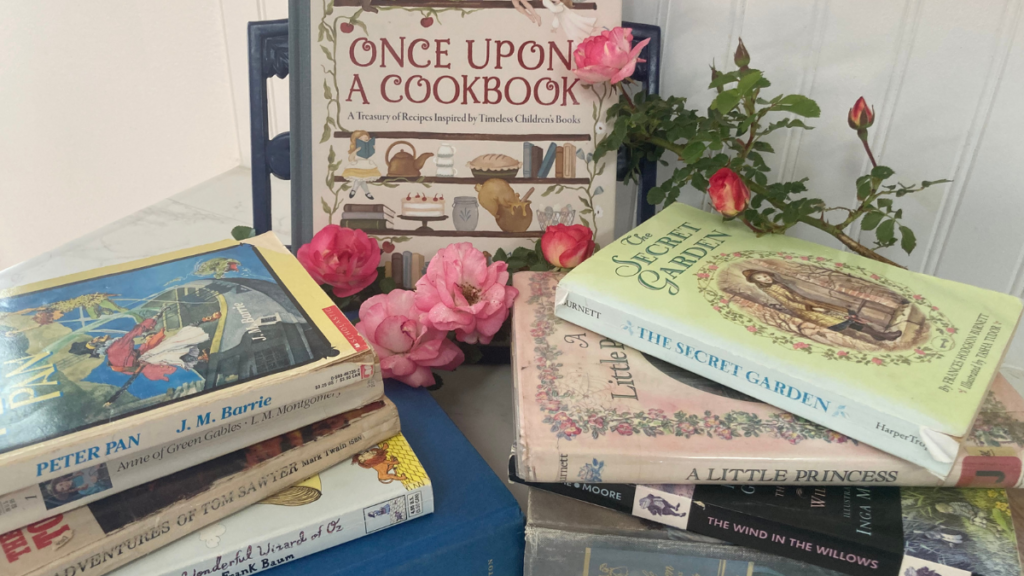
How did you narrow down to the specific books you used to inspire your recipes? It must have been hard!
So many of the books that ended up in Once Upon a Cookbook were stories I grew up with. There’s a thread that runs through all of them though, and I knew from the beginning I was looking for it.
There’s a feeling you get when you read certain stories, a nostalgic pull toward a way of life that feels familiar and comforting. In my mind, these books feel like they’ve always existed. They actually all come from what’s known as the golden age of children’s literature, roughly the mid-nineteenth to early twentieth centuries. But more than the era, the stories carry a feeling of coming home to a world you never knew, but somehow also remember.
The easiest way I can explain this process is by giving the example of Charlie and the Chocolate Factory. While it’s a wonderful book that I love to read, the work of Roald Dahl comes from a completely different era and carries a different feeling entirely compared to The Wind in the Willows or The Secret Garden. So, narrowing down my books really came to asking that one question: Does this book have that quality?
Stay tuned for a follow up on how Bryt selects and creates her recipes, tips for young “Chefs in the Making” and how they can create their own recipes! And of course a little chat about the delightful illustrations! Blog post coming Thursday!
Love,
Mattie




One Comment