
Behind the Covers: Once Upon a Cookbook, Part 2
A Delicious Chat with Bryt Taylor
Disclosure: This post may contain affiliate links, as I am an Amazon Associate, this means that I will make a small commission if you decide to make a purchase through my links, at no cost to you.
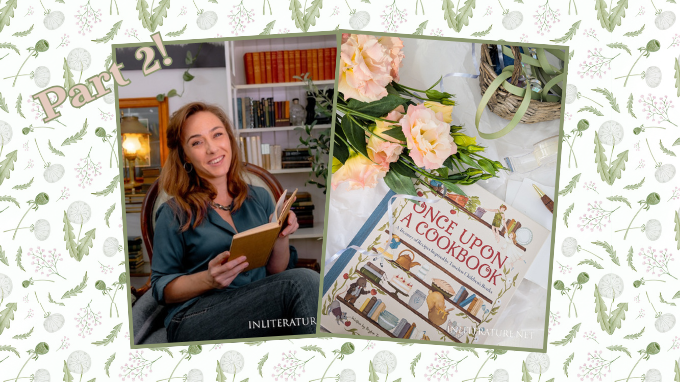
We are back with Bryton Taylor chatting about her beautiful new book: Once Upon a Time Cookbook: A Treasury of Recipes Inspired by Timeless Children’s Books, illustrated by the very talented Emma Adams. Let’s jump right back in! (first part of the interview can be found here).
You mention in Once Upon a Cookbook’s introduction that you selected the recipes either because they are mentioned in the children’s book or because you felt inspired by a specific scene in the book. Let’s talk about that process a little more
How were you able to reconstitute time period accurate recipes?
The garden crumpets from The Secret Garden are a good example. Crumpets are still easily available today. You can buy them in the bakery section of most supermarkets. But when I went back to the earliest recipes I could find and started testing them, the results were… mixed. And some definitely not crumpets! It’s a good reminder not to take old recipes at face value. You have to draw from multiple sources beyond the old cookbooks for context and references: food encyclopedias, the work of food historians and writers, like Elizabeth David, who was quite important for some of my yeast-based recipes. You’re building on the research of others who came before you. And even then, there’s always a process of modernising. Fresh yeast behaves very differently to the active dry yeast most of us have in our cupboards today.

If it’s possible, can you explain how a certain passage can inspire a recipe?
When it comes to being inspired by a passage rather than recreating a historical dish, Wendy’s Mammee-Apple Slice from Peter and Wendy is a good example. In Neverland there’s the imaginary food scene, but the majority of the foods described are real, coconuts, bananas, breadfruit. The mammee apple is a real fruit but it’s tropical, and not widely available around the world. So it becomes a creative problem: how do you recreate a flavour that not everyone can access?
But the world of imagination also gives you permission to be playful. You go back to the descriptions. People describe the mammee apple as sweet and tangy, somewhere between apricot, passion fruit, and berries all at once. So with that flavour description, I built the filling: dried apricots for texture, apricot jam, raspberries, passion fruit puree, all things you can find in cans, tins, or the freezer section around the world. Then lime juice and citric acid to bring out that tanginess.
That’s one of the processes I take when being inspired by a food description rather than researching a historical recipe. Food in literature gives you that space to go either way.
Did you have any recipe that you were hoping to include that did not turn out as planned?
Rather than recipes not turning out, what surprises me instead, is how incredible homemade is compared to what we find in the stores. I shouldn’t be surprised by now. But biting into that first fresh homemade crumpet straight from the pan, it is a completely different experience to anything you’d buy in the shops. It’s moments like that where the whole journey of exploring historical recipes feels so satisfying.
It’s not so much that recipes didn’t turn out as planned… It’s more that every time I approach a recipe, it’s an exploration rather than a straight path. What’s helpful is knowing what I’m chasing: the closest possible version of what characters would have actually eaten.

I love the fact that you included notes for the “Chefs in the Making”! What prompted you to do that?
I can actually thank my publishers for that one. They suggested I bring it into the book, and I’m really glad they did. The notes I’ve included show younger cooks where they can step in and contribute, at whatever age and stage they’re at.
Because at the end of the day, I never set out to create a children’s cookbook. I set out to create recipes that anyone could cook from, and then make sure kids of all ages knew they were included in that invitation.
I loved one of the comments I received. A reader said they appreciated that I didn’t underestimate children’s abilities. And I think that’s really important because when you think back to being a kid in the kitchen, the sooner you start, not just watching but actually getting your hands into the dough, smelling the ingredients, learning how a batter should feel when you stir it, those sensory experiences build something in you that no amount of reading a recipe can replicate. And that’s true for all of us at any age. The recipes aren’t simplified or watered down. They’re the real thing. It was just about encouraging kids to get involved.

What tips would you have for the “Chefs in the Making” that would like to create their own literary recipes?
Kids have a real edge here because they don’t feel limited by what they already know. Adults tend to start from what’s logical and work outward. Kids start from imagination, which is exactly the right place to begin.
Take the Neverland scene in Peter and Wendy as an example. Before you think about researching or heading to the kitchen, just sit with the words. What do you imagine a calabash of poe-poe is? Is it a food or a drink? What does it taste like? What colour is it? How would you serve it? Is it sweet, tangy, warm, cold? Maybe try drawing the dish before you make it. Imagine the flavours, ask all those questions. That’s where the creative process really begins. And kids are incredibly good at that.
When I started exploring food in literature, that’s actually where I began too. I came from that same imaginative place rather than the historical side. That historical curiosity came later. So start with the story, start with the feeling, start with what sparks your imagination.
One resource I’d recommend is a book called The Flavor Bible. It isn’t a recipe book. It’s a guide to flavour combinations, just lists of ingredients and what other chefs tend to pair together. When you’re creating recipes from scratch, particularly ones sparked by imagination, it’s a great starting point for building a flavour in drinks or dishes that actually works. And what I love is that it encourages curiosity and experimentation.

What is it about sharing food that deepens our connection to a story? Why do you think stories and recipes feel so natural together?
This circles back to that example I gave about reading The Boxcar Children as a kid. Food in a story isn’t really about the food. It’s about believability. When food appears in a story, it creates this instant thread between that world and our own. It doesn’t stand out. It just makes the world feel more real.
When you cook a recipe inspired by a book, you’re bringing a part of that world into your own. You’re no longer just a reader. You’re participating. And when you share that experience with someone else, you’re creating a new memory together that is tied to a story you both already carry. I think that’s something quite beautiful.
I love Emma Adams’ illustrations! It gives the entire cookbook a picture book feel that is just right! Have you worked with Emma before? Were you able to choose her as an illustrator?
Emma was chosen by the publishers at Insight Editions, and when they shared her work with me I completely understood what drew them to her. In her own words, she describes old folk tales steeped in magic, mystery, and fantasy as an important source of her inspiration, and I think we can all agree that comes through on every page. There’s something whimsical and nostalgic about her illustration style that really works for this book. She’s not just showing the recipes. She turns the cookbook into a storybook world of its own, something you want to sit down with and read, not just cook from.

Where can we find more goodness from you?
Since Once Upon a Cookbook is now out in the world, I’m really excited to be coming back online after a few years away. It feels like the right moment. My home base is InLiterature.net. That’s always the best place to see what I’m working on and exploring next.
From there, I’m most active on Pinterest and Instagram, both under @brytontaylor. On Instagram, I like to occasionally share snippets and take people a little more behind the scenes in my stories, into current projects, recipe testing, and the everyday rhythms that feed into my work. It feels like the right place for that kind of quieter, more personal sharing.
And if you do find me, please drop me a note or a comment! It’s always lovely to know where people have found me from. One of the beautiful things about social media is that it helps like-minded people find each other.
Thank you so much Bryt for chatting with us and for gifting us such a delicious book!
I’m off to the kitchen for some crumpets!Love,
Mattie




One Comment