

Picture Book Exploration: The Secrets of Tutankhamun
Disclosure: This post may contain affiliate links, as I am an Amazon Associate, this means that I will make a small commission if you decide to make a purchase through my links, at no cost to you.
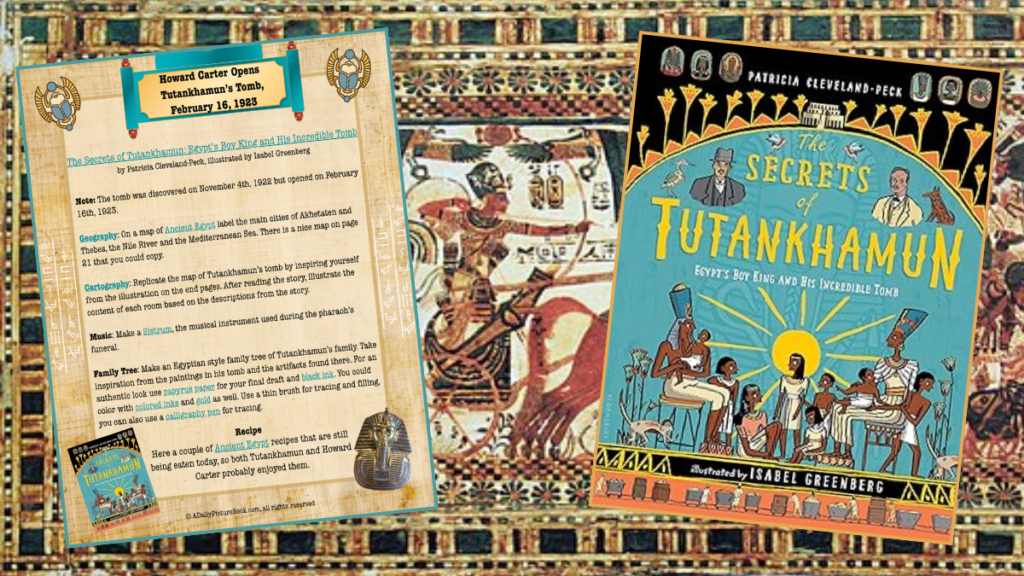
If you have been around a little while, you will know how excited I am about this month’s Picture Book Exploration: The Secrets of Tutankhamun: Egypt’s Boy King and His Incredible Tomb, by Patricia Cleveland-Peck, illustrated by Isabel Greenberg. As an archaeologist by education, Tutankhamun’s tomb always sends tingles of excitement down my spine, no matter how many times I look into it! So put on your pith helmet, hiking boots and grab a parasol (you never know) and let’s explore one of archaeology’s greatest finds!
The Secrets of Tutankhamun: Egypt’s Boy King and His Incredible Tomb, by Patricia Cleveland-Peck, illustrated by Isabel Greenberg
This picture book is one of the most complete picture books I have read in a long time! Not only will it take you through the historical discovery of Tutankhamun’s tomb but you will discover the life of this young Pharaoh and traditions from Ancient Egypt. Patricia Cleveland-Peck has done a wonderful job interweaving Tutankhamun’s life and early deaths with the discovery of his tomb and Ancient Egyptian’s daily life. Isabel Greenberg’s graphic-style illustrations transport us into the heart of this amazing archaeological find. This picture book will leave you with many answers and quite a few questions. A wonderful way to learn all about Tutankhamun and his tomb.
Tutankhamun
Titankhamun was not an important pharaoh, in the sense that his reign was so short. He was so young when he ascended the throne and he never actually got to reign on his own. His vizier and guardian, Ay, did the real ruling, proven by the fact that he became pharaoh after Tutankhamun’s death. Tutankhamun was just a figurehead. The most important event of his short reign was the religious reversal from the one god religion established by his father Akhenaten to the god Aten to the restitution of the Egyptian pantheon with Amun as the main god. This is significant because in the process, Akhenaten and his reign were almost erased from history, creating mayhem in the country at the time and in historical records forever.
Tutankhamun’s Tomb
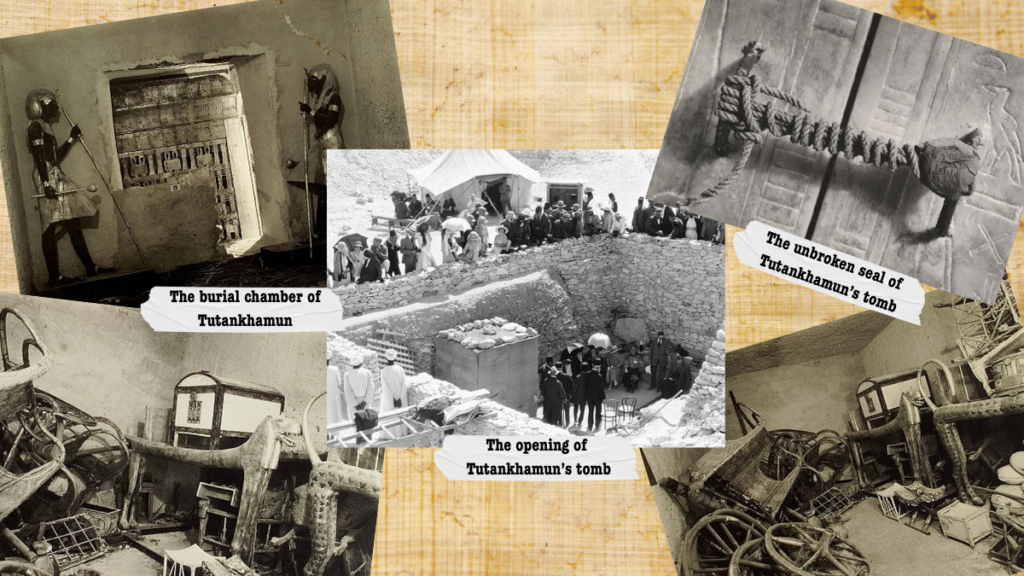
Tutankhamun became famous because of his tomb, not of himself. Why was his tomb such a fantastic find? Because it was, and still is, the only near-intact royal tomb ever found. That means that no grave robbing, or very little, had taken place before the tomb was opened. This gives us the most extensive understanding of Ancient Egyptian royal funerals and burials. The documentation and study of Tutankhamun’s tomb helps us understand and realize the extensive care the Ancient Egyptians took of their dead and why such fabulous monuments as the pyramids were built for them. So when this tomb was opened on February 16th, 1923 (it was actually discovered on November 4th, 1922), the world was able to time travel and discover the richness of the Ancient Egyptians even more.
Geography
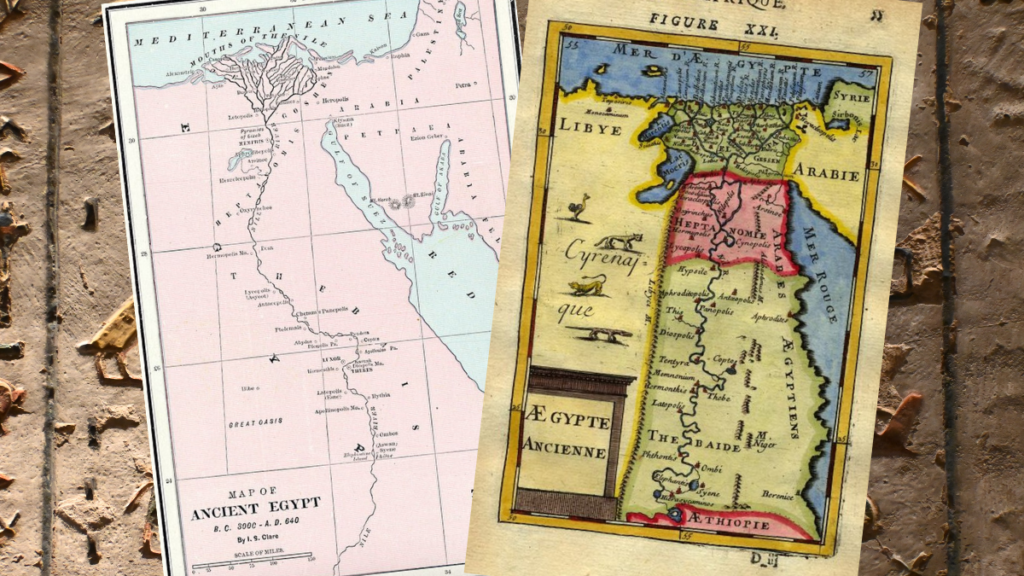
Ancient Egypt was built along the banks of the Nile, the cradle for this stunning civilization. The Nile always seems to flow backwards for me, lol! With its source in the depth of Africa, and its delta on the shores of the Mediterranean Sea it flows from the South to the North. The geography of Ancient Egypt is fascinating to me as they stuck to the Nile, understandably so, and created the greatest of tombs and palaces along its banks. The river is truly the main artery of the country. On a map of Ancient Egypt label the main cities, the Nile and the Mediterranean Sea.
Cartography
I love a good treasure map! And mapping out Tutankhamun’s tomb and the treasures found in each chamber feels just like creating one. Inspiring yourself from the map illustrated on the end pages of the book, create your own map of Tutankhamun’s tomb based on the description from the story and any additional research that you might want to do. Once you have a good layout, fill each room with its proper content. You could either create a map key to describe each object or actually draw them. Spend as much time on it as you want, this really such a fun project!
Music
The Egyptians were quite fond of music as demonstrated by the hieroglyphics found on the walls of many tombs. One of their most intriguing and delightful instruments was the sistrum. A rattle-like instrument, it was not a baby’s toy but it was used in many sacred ceremonies, including the burial procession of Pharaoh. Even if we cannot know exactly how they sounded or were played back then, it would be very fun to create your own.
Family Tree
Family trees have been important for centuries in all civilizations. Knowing where we come from is essential in knowing ourselves. Create an Egyptian style family tree of Tutankhamun’s family, or your own family. Take inspiration from the paintings in his tomb and the artifacts found there. For an authentic look use papyrus paper for your final draft and black ink. You could color with colored inks and gold as well. Use a thin brush for tracing and filling, you can also use a calligraphy pen for tracing.
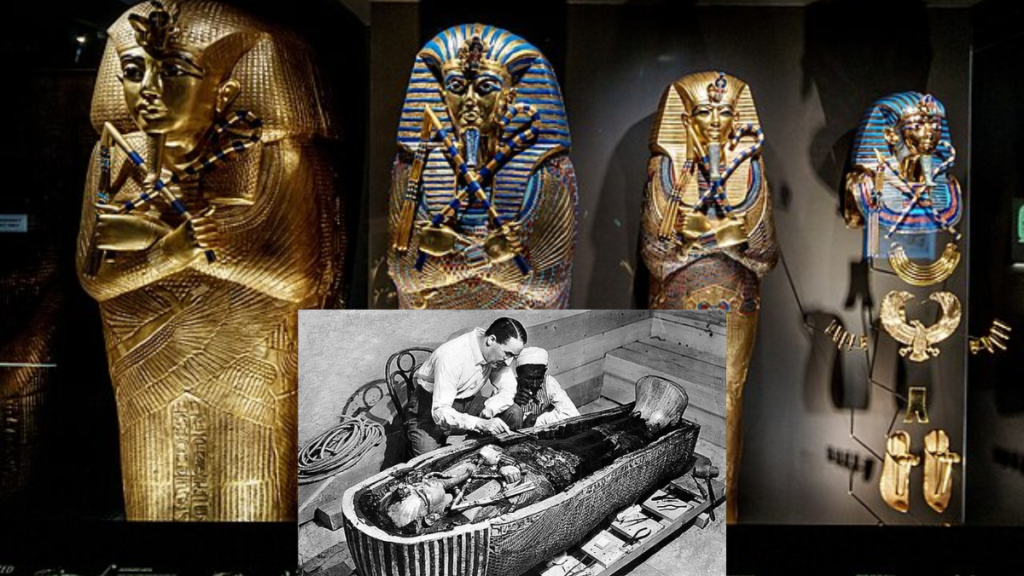
Howard Carter opening the sarcophagus, 1925
Recipe
Discovering a country or a civilization’s eating habits are always very enlightening. The food we eat and how we eat tells so much about who we are and what we value. And it has been the same through the ages. From the men of Cro-Magnon eating around a campfire to the Romans reclining in their villas, food and eating are an essential part of our everyday lives. So discover what Tutankhamun would have eaten. Here are a couple ofAncient Egyptian recipes that are still being eaten today. Both Tutankhamun and Howard Carter probably enjoyed them.
I hope you enjoyed this exploration as much as I did! What an adventure it has been! I will see you next month for a new adventure, or you can join us for a daily adventure through the monthly subscriptions.
Love,
Mattie


