The Simple Art of Poetry
Disclosure: This post may contain affiliate links, as I am an Amazon Associate, this means that I will make a small commission if you decide to make a purchase through my links, at no cost to you.
Did you know that April is National Poetry Month? What better month to dwell into poetry than the heart of spring. I had grand plans for this month, but time was not on my side, so it will be for next year, lol! Instead we will keep it simple, easy and so enjoyable that, hopefully, my girls will want more. I love poetry, sometimes I love the idea of poetry more than poetry itself, and very often the memories of poems that I have encountered throughout my life.
Poetry
Poetry should be present in our life every day. It is such a perfect example of truth, goodness and beauty that it should have an important place in our daily rhythm. But oftentimes, I push it to the side, “I’ll get to it later” I say, and never get to it. So this month, I am making the resolution to bring poetry back to the forefront of my life and back into my home education. It needs to be simple and light for me to make sure it happens.
Simplicity
Poetry does not have to be complicated. During certain seasons, Poetry Tea Time can be too much for me, as much as I love it. And right now is such a season. So when I say I am going to keep it simple, I truly mean bare bone simple. We will select a poem to all learn by heart, work on it daily (technique below), copy it in our Poetry Notebook, illustrate it if we choose to and research the life of the poet over time. That’s it. So very simple and therefore enticing to me and to the girls. It is not another big project. It will take us maybe 10 minutes a day. But it will be 10 minutes of greater beauty.
How to memorize poetry
Poetry memorization is very simple and it’s even easy if you make it a habit. It should be a habit for us to learn poetry and songs by heart, it used to be so common but we have come to rely on devices to do it for us… So chuck your phone, etc… and jump back in time to start memorizing beautiful poems again (and songs too!)
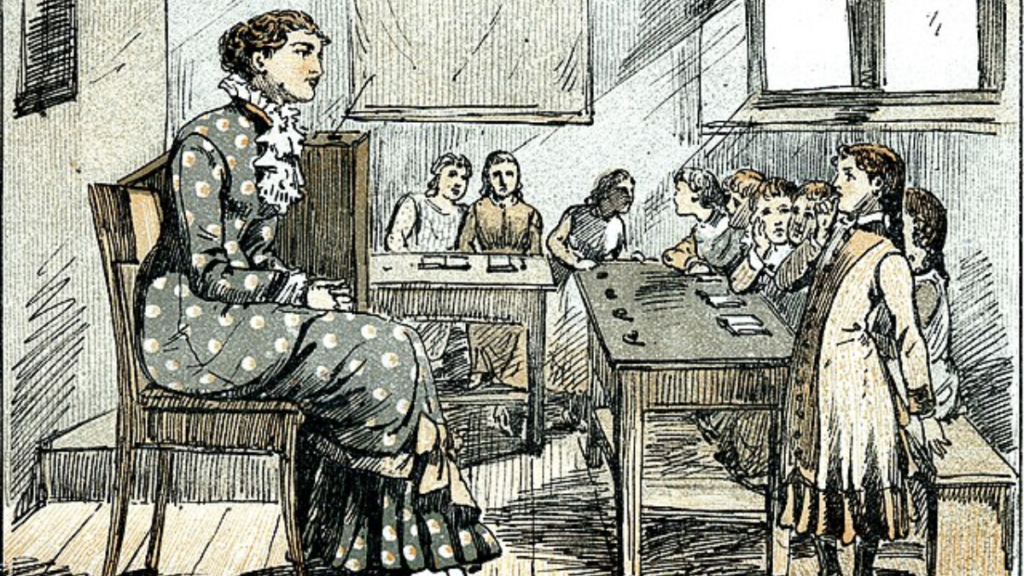
The first thing to do is to read the whole poem out loud. We usually start with the title, if there is one, and the name of the poet. Then we read the poem. After having encountered the poem we start learning it by heart, little bit by little bit.
First the title and the poet, read it once, then everyone repeats it together. Then repeat it three times together. And one last time, each person on her own.
Then you repeat this process with the first line of the first stanza. Then you repeat the title, the name of the poet and the first line in the same pattern.
And you follow this pattern for each following line of your poem.
With which poem to start?
Any! But I would recommend a short one. Our first ever poem to memorize was
The Fly
by Ogden Nash
The Lord in His wisdom created the fly.
And then forgot to tell why.
It is short, funny and so simple to remember that it makes it an easy win. And if you start something new with laughter and ease, chances are that it will be easier to bring in the next one and then the next one.
Our favorite sources of first poems to memorize
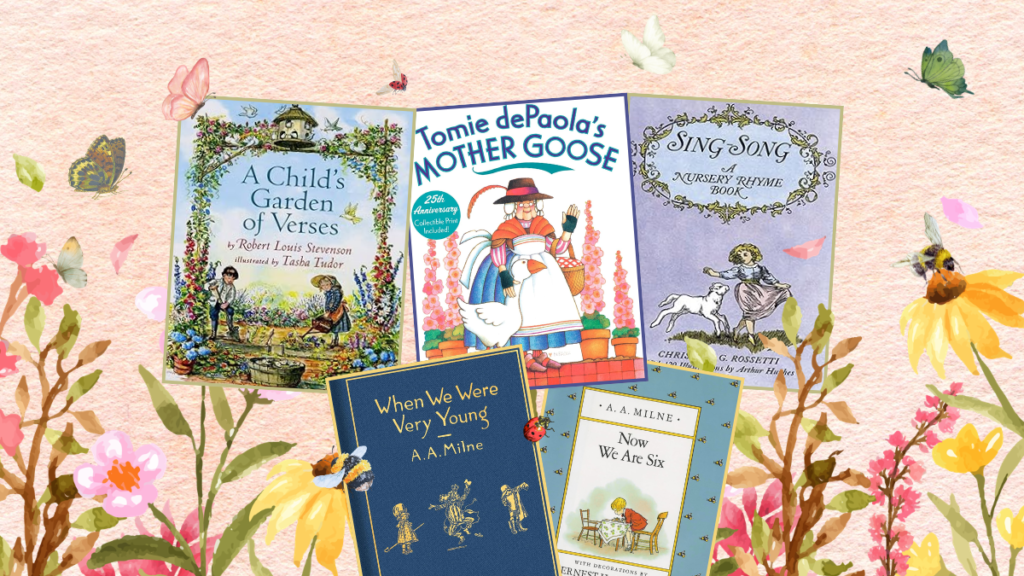
- Tomie dePaola’s Mother Goose
- A Garden of Verses by Robert Louis Stevenson (definitely MY favorite)
- Custard and Company by Ogden Nash
- Sing-Song by Christina Rossetti
- When We Were Very Young and Now We Are Six by A. A. Milne (Wonderful to memorize alongside reading aloud Winnie The Pooh)
When to start
I am always surprised at how much the younger kiddos love learning poems by heart! It is always one of the first things I start in my home education. And they love it and love showing off what they know. The shortest, the easiest. It is also easier to teach a short poem or rhyme if I know it by heart… Because then we can just memorize it as a game while walking to the park, or sing it while exploring the backyard.
How to move from memorization to Poetry Notebook
When my children are youngest I usually either handwrite the poem myself in their Poetry Notebook or simply print a copy of it. They are then free to illustrate it as they choose. This helps instill in them the habit of keeping a Poetry Notebook and how to use it. Then soon they will want to write it themselves. For that I love using Canva with the fonts Trace or Neal. I will type the poem, print it and let my child trace the words. I slowly make the letters lighter and lighter until they can start copying it themselves from the book on lined paper.
Gradually your student’s handwriting will improve, as well as independence, and, voila! You have created a habit!
Skills developed through poetry
Poetry opens the door to so many skills: memorization, yes, but also handwriting, keeping a neat Notebook, and taking responsibility for your own work. It also expands into art, with illustrating the poem, and writing skills as reading beautiful text will enable my child to recognize beautiful patterns and vocabulary as she starts to write her own stories and poems. So poetry is far from a waste of time or some nice fluffy thing to do if you have time. It is a cornerstone of beautiful education. The language used in poetry is of the best kind as it has to be just right for rhyme, meter and meaning. Therefore each word is carefully chosen and enlarges our vocabulary.
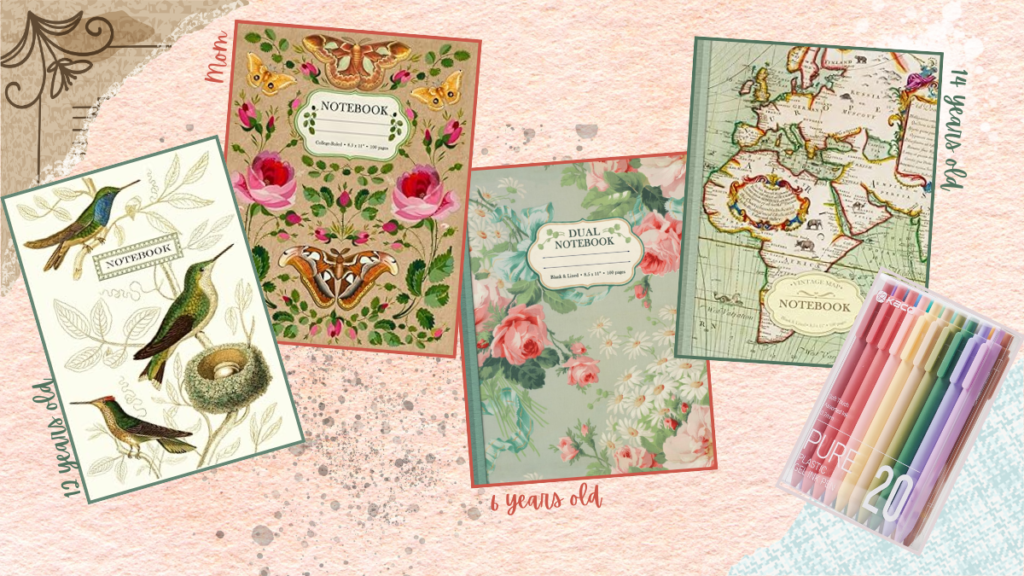
So this April I will actively restart our poetry habit in our home education. I might splurge on beautiful Notebooks and pens, just to entice the girls to get restarted. It might be bribery or it might just be having the right tools to perform the task to our best ability. And, yes, I will start my own Poetry Notebook alongside them.
Love,
Mattie