Keeping Company with Nature: Delighting in Nature Study
Disclosure: This post may contain affiliate links, as I am an Amazon Associate, this means that I will make a small commission if you decide to make a purchase through my links, at no cost to you.
You have gone on a beautiful Nature Walk. You have managed to create an entry in your Nature Journal. And now you are home. What now? Do you just hang your satchel, put your Nature Journal away and forget all about it until next time? No, the party continues! Remember John Muir Laws’ advice? “ I notice, I wonder, It reminds me of…”, so let’s take it a step further with Nature Study.
Summary
We have determined that a Nature Walk is quiet time out of doors observing nature. During that quiet time you will grab your Nature Journal and draw what you are observing. As well as make some notes about it. In those notes there is most likely going to be at least one question. In our previous example we mentioned a bumblebee bumbling from flower to flower and the child’s question of “What is that bee doing?”. Well, now that we are home is the best time to answer this question.
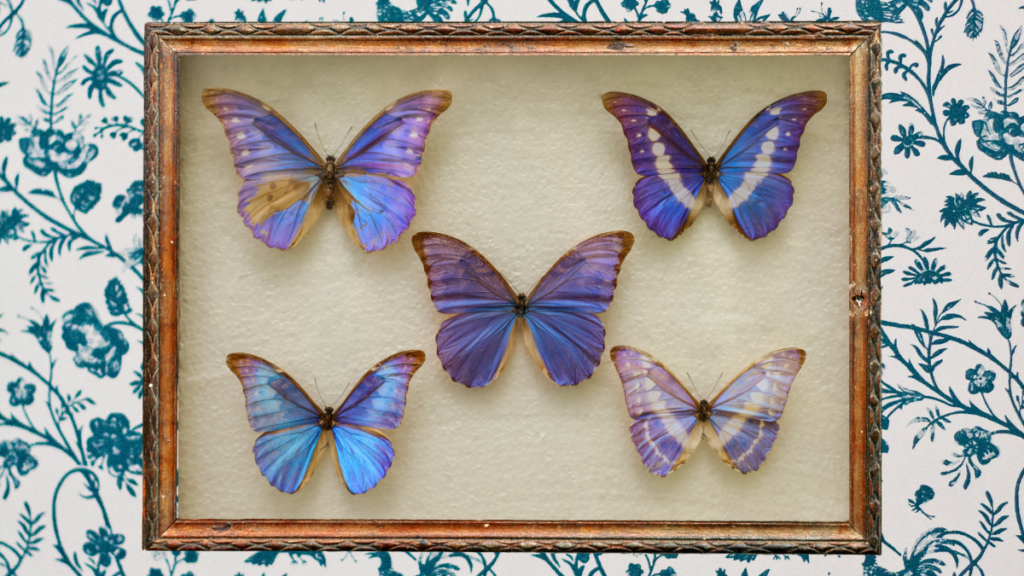
John Muir Laws’ advice of “ I notice, I wonder, It reminds me of…” is the perfect road map for our Nature Study.
“I notice”
We have already done this part, the first step in our discovery of nature through the Nature Walk and Nature Journaling. Hopefully we have written what we noticed and it has triggered some questions. Noticing is the first important step in Nature Study as from it curiosity will be ignited which leads us to “I wonder”. More often than not, our observations will have triggered questions that we should have jotted down in our journals.
“I wonder”
The quintessential question, the one that opens the door to greater discovery and understanding. When we are on a Nature Walk, let’s refrain from answering any questions that pop up. Instead let’s write them down in our Journal and once we are home we can revisit them. There might be many questions if your Nature Walk took you to a new area or just a simple one as you visited a favorite haunt and are already familiar with it. It does not matter, all you need is one question.
The question
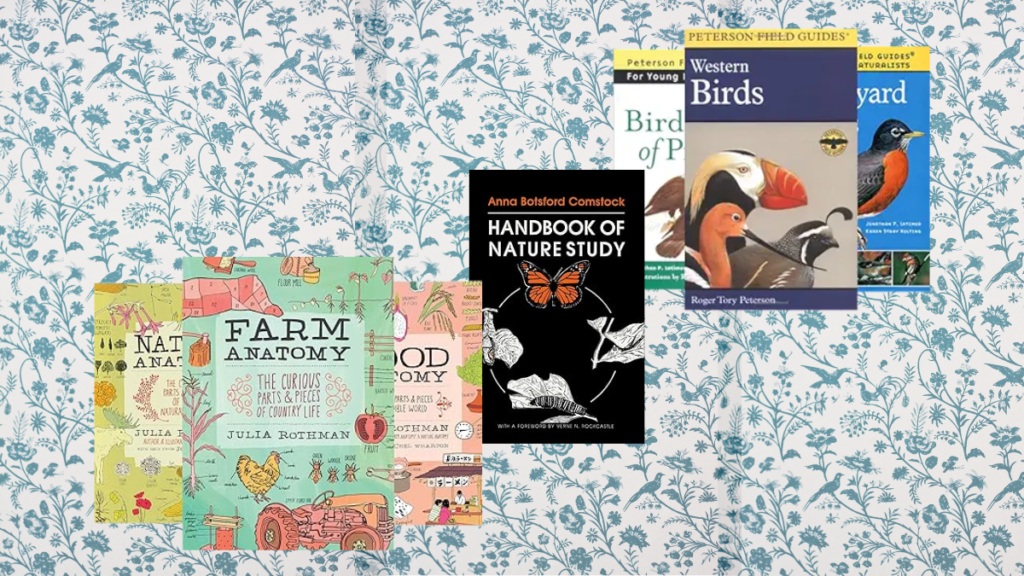
bumblebee doing?”. The best way to answer this question is with another question: “What do you think it was doing?” Leave some space and time for brainstorming some ideas. Then you can start looking at the answer from other trusted sources. Of course, the best place to start would be in your home library. Here is a list of “essential” Nature Study” books that grace our shelves and are easy to get to:
- Handbook of Nature Study by Anna Comstock – this one is so wonderful, you almost don’t need any other.
- The Anatomy Collection by Julia Rothman – less detailed but wonderful for beginning
- Peterson Field Guides – we have acquired these as our curiosity dictated, so in no particular order.
And of course, we have many, many picture books on different subjects, but that will be a post for another time. The main thing I try to teach my children is how they can find the answer to their questions, on their own, with the proper resources.
The answer
I always try to have as many resources at home as possible, but if we are stuck, we will first look at the library for resources and if that fails, the internet. I try to stay away from the instant answer that the internet provides. There is so much value in research and not getting an instant answer. Research teaches us many, many things, but specifically the virtues of patience, perseverance and industriousness, the arts of knowing what we are looking for and of learning along the way. When the internet pops its ready answer we have just learned (maybe) a new fact and that’s it. But when we have to research the answer ourselves, we learn so much more! We have to read more to find the answer we are looking for. Therefore we discover more, we can go down rabbit trails, we can make connections! It is a little more arduous but the adventure is worth it. I am not anti-internet (obviously) but I think it has to remain in its right place: a last resort while doing research for Nature Study.
Notebooking/Journaling
While looking for your answer, I would highly recommend Notebooking your find, either in your Nature Journal or in any other Notebook that seems appropriate to you. You can jot down notes on what other questions arise from looking for your answer, you can jot down your thoughts and comments on what you are learning. Having your other questions written down will help you expand your knowledge of the bumblebee but also go down rabbit trails you would never have come across otherwise. And then, of course, you go back to your Nature Journal and answer your question. Notebooking and Journaling are the best way to keep track of what you are learning and it helps you create your own reference book!
The learning is in the process
The end result is not quite as important as the process. The process is where the learning takes place, hence the importance of the research vs the instant internet answer. Through this process of asking questions and looking for the answers, then recording it, our brains are getting a wonderful bit of exercise. We are absorbing way more than we think through this learning process. We also discover other interesting facts and that will allow us to expand our horizons, triggering more questions that will need their own answers.
Nature Study, taken to its full range of possibilities, is truly an in-depth opportunity to learn about the world surrounding us and about ourselves (it is always fascinating to observe humans too, lol). I hope that you will follow the full triptych of Nature Study: Nature Walk then Nature Journaling then Nature Study. And then discover a whole new world right where you are. This has been one of the most lovely experiences that homeschooling has taught me and it is (almost) always a delight to share it with my children. So pack your satchels and head out!
Love,
Mattie