The Art of The Nature Walk
Disclosure: This post may contain affiliate links, as I am an Amazon Associate, this means that I will make a small commission if you decide to make a purchase through my links, at no cost to you.
“Just go on a Nature Walk!” We often hear this as the response to boredom and a stale homeschooling atmosphere. And there is great wisdom in that advice. Heading outside when things are not going well inside is the best advice ever for anyone, young or old, in any circumstance. But how does one go on a Nature Walk? Isn’t it just the same thing as a regular walk? No, there is an art to going on a true nature walk and that is often overlooked.
What a Nature Walk is not
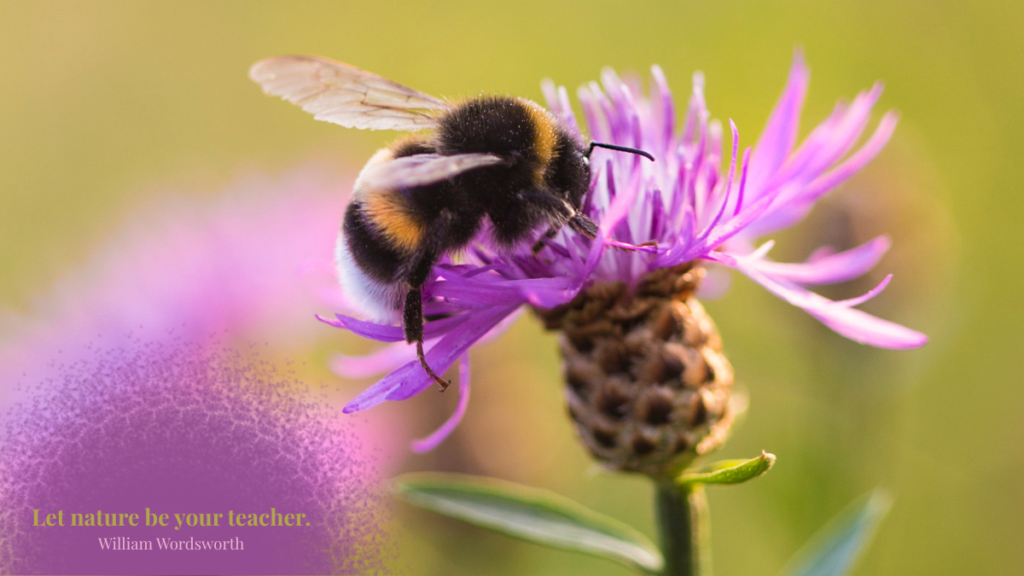
A Nature Walk is different from a Nature Study. I feel that the two terms are often used interchangeably but really, they should not be. Nature Study is the result of the Nature Walk, not the other way around. Without heading outside on a Nature Walk the child will not be able to have his curiosity piqued by the fat bumblebee bumbling around the flowers. Therefore he will not ask “What is that bee doing?”. The question is the igniter of Nature Study. Let’s focus on the Nature Walk itself.
How does one go on a Nature Walk
A Nature Walk is, by definition, a walk (not running, climbing, etc…) in nature (a field, a forest, a garden, a park, a river bank, etc…). When we head outside in nature very often children need some time to run, burn some steam and be loud before they can settle into a Nature Walk. A Nature Walk is a quiet time walking along and observing nature.
A quiet walk
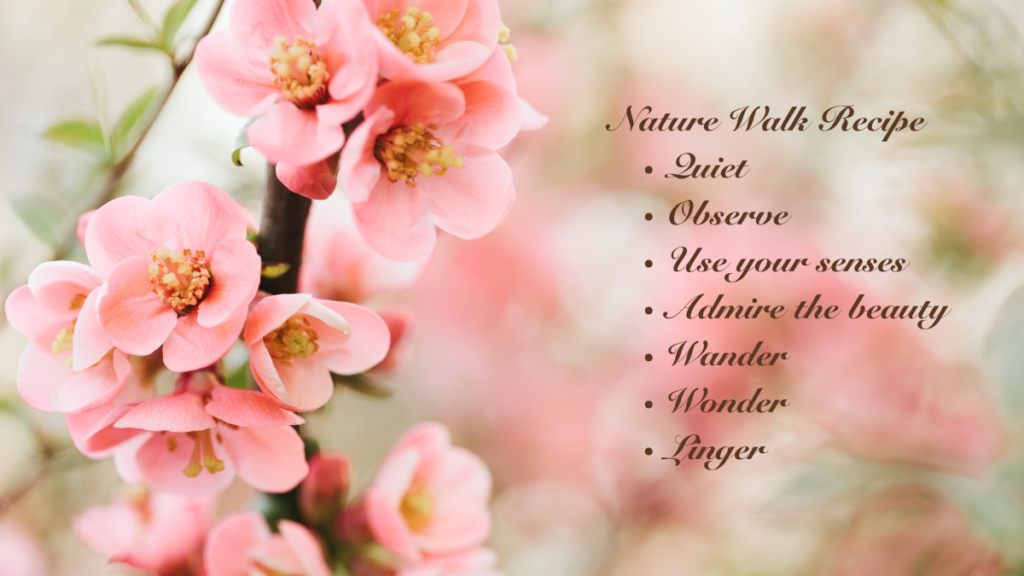
After letting off some steam and enjoying the freedom of running, shouting, climbing and jumping, it is time to settle down for your Nature Walk. A Nature Walk is quiet. No chattering, singing or running around. Depending on the age of the children it can be short but it has to be quiet. This is a great time to learn to keep our thoughts in our head, to control our tongue. For the parent, it is important to not turn this time into exposing our knowledge of nature and to also be quiet. During this quiet time we can walk down the trail, meander through the meadow, walk alongside the bank of the river, quietly observing the nature around us.
Observation
The main goal of the Nature Walk is to observe nature, ask questions and marvel. Hence the necessity for quiet. Each person (Mom should participate, this is not just for children) should be as autonomous as possible, observing what has attracted their attention. Nothing about this should be forced. Observation means engaging all five senses, taking in the details. Observing is more important than the next step, Nature Journaling. From the observation is born the Nature Journal. In your Nature Journal you will write down your thoughts, questions and what you have observed, and of course draw or paint your subject.
Involving the senses
I first discovered Nature Walks while I was a Girl Guide in France. Nature observation was fully part of our activities. While we were always in nature for our activities, each day 15 to 30 minutes were set aside for nature observation and nature journaling. Some days we focused on what sounds we could hear, others on smells or sights, occasionally on taste and we were always encouraged to touch what we could. Often it is difficult to take everything in while observing nature. Focusing on a single sense brings things to our attention that we might have otherwise missed. It is also a great exercise to strengthen our non-dominant senses.
Beauty
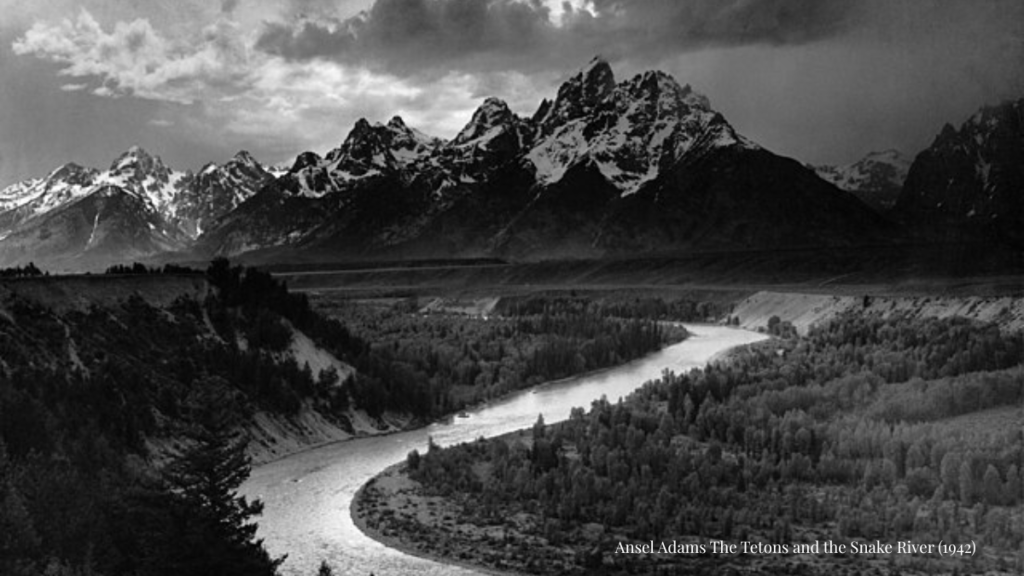
“Nature study will show you how full of beautiful and wonderful things God has made the world for you to enjoy.” Robert Baden-Powell, founder of Scouting. When we spend the time to pause and observe and tune out the noises of the world, we can discover the deep layers of the world around us. It brings to the forefront the beauty of creation so that we may marvel in its beauty down to the tiniest detail. And admiring this beauty will very often lead us to thanking the Lord for it and to prayer. The beauty of nature should bring us to our knees, everything is so marvelously made!
Nature Journaling
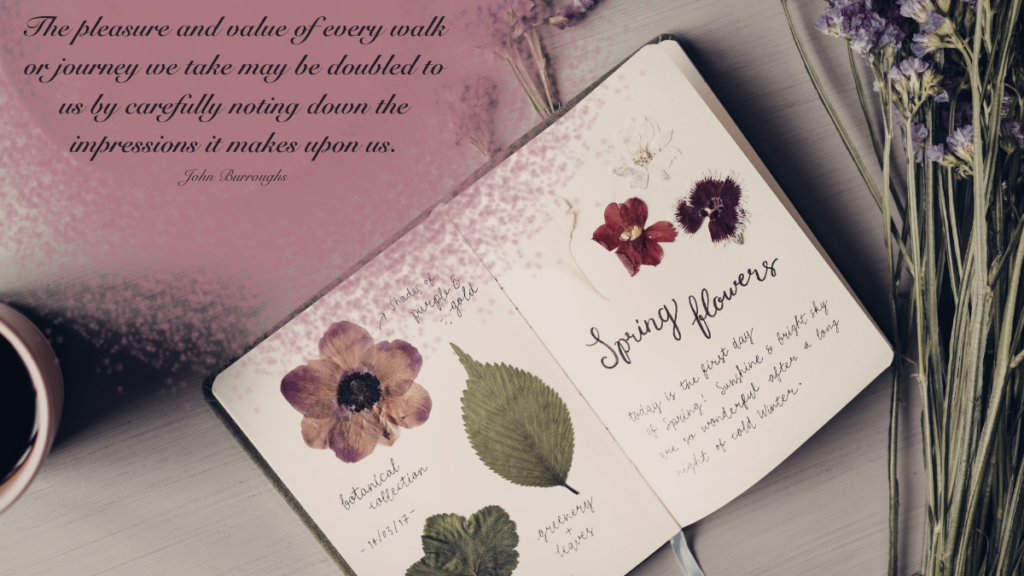
Now is a good time to pull out our Nature Journals and to enter our observations, our questions and to draw or paint what has attracted us today. John Muir Laws has a wonderful way of remembering what to add to our Nature Journal. He always says: I notice, I wonder, It reminds me of… This is such a great way to not get bogged down with what to enter in our Nature Journals. It is simple, memorable and easy to apply. And creates a natural flow from the Nature Walk to the Nature Journal.
Go!
Nature Walks are an all seasons activity, just dress appropriately and make sure you have what you need. I have created little Nature Walk satchels for each of us, so we can just grab them and go. The content of the Nature Walk satchel is always returned immediately to the satchel after use. This discipline is very important to enable us to be able to grab them on a whim. If it’s always ready it makes it so easy for us to head out the door into nature!
Nature Walk satchel content:
- A small backpack or messenger bag
- Nature Journal
- Color pencils
- Watercolors
- Paper towel
- Water container, filled
- Brushes
- One black ink pen
- Mechanical pencil
- Eraser
I hope to run into you in the great outdoors sometime soon, walking quietly around observing and marveling!
Love,
Mattie
Post Scriptum
In the above quote Baden-Powell echoes Charlotte Mason educational principle almost to a t. That is because they were contemporaries, and they each promoted each others’ work as beneficial for children and youth! These two giants of education have been very influential in my life. I would say that Baden-Powell’s Scouting “saved” me and gave me a strong foundation of character and virtues that were certainly not present in school and Charlotte Mason helped me build the rest of the house on this foundation. I dream of creating a curriculum that marries both philosophies of education.